Screening Mammographies
CMS 1500 Professional Services
Did you know?
- According to the American Cancer Society (ACS), breast cancer is the most common cancer in American women after skin cancer. About 1 in 8 women in the U.S. will get breast cancer in their lifetime.
- For the year 2026, the ACS estimates that in the U.S. 321,910 new cases of invasive breast cancer will be diagnosed in women, and that 42,140 women will die from this disease.
- Breast cancer can also occur in men; for the year 2026, the ACS estimates that in the U.S. 2,670 new cases of invasive breast cancer will be diagnosed in men, and that 530 men will die from this disease.
- The main factors influencing your risk of getting breast cancer include being female and getter older. Other risk factors include having certain genetic mutations and having a family or personal history of breast cancer.
Why should I care?
- A screening mammogram can help find this disease early when it is easier to treat.
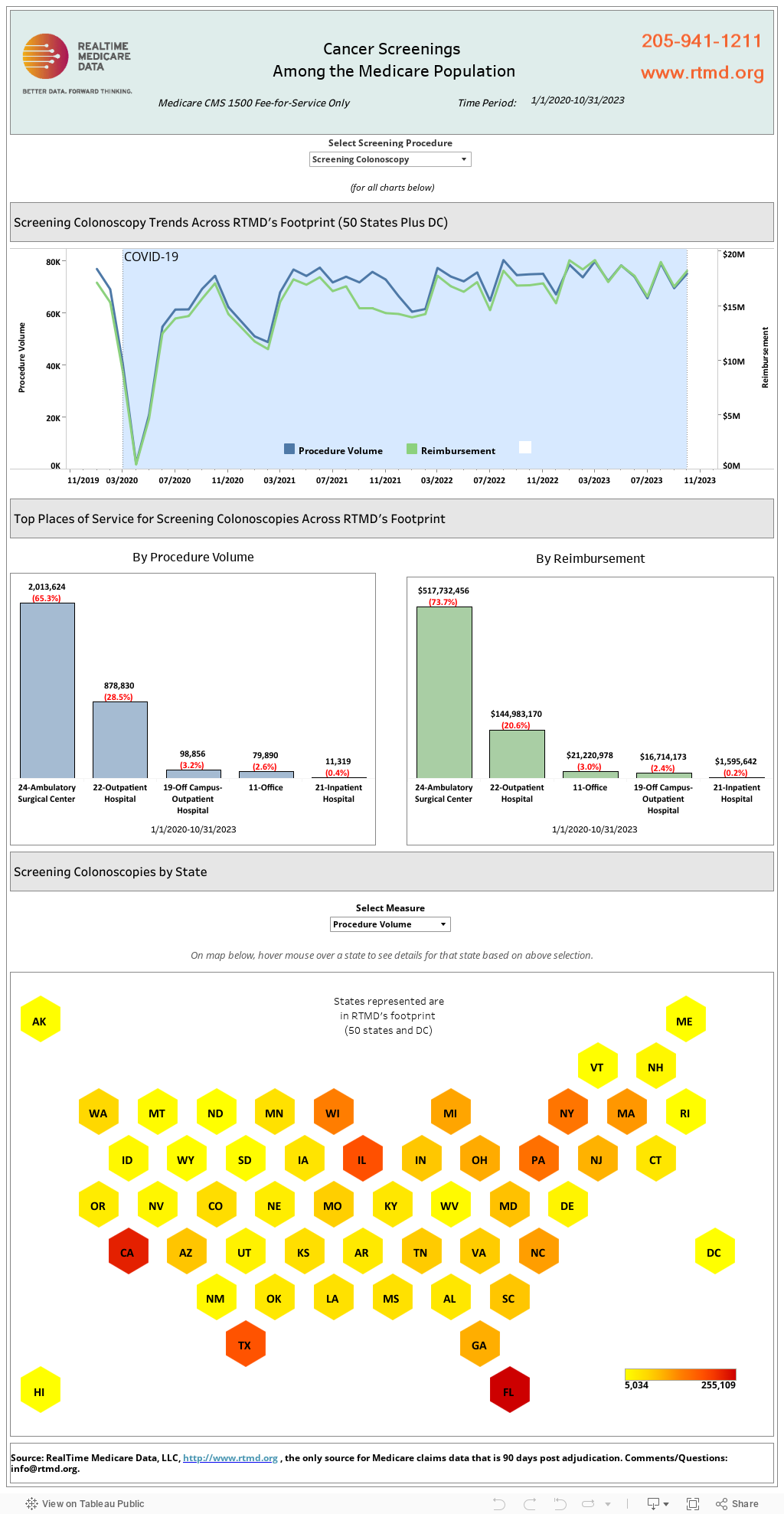
- During the COVID-19 pandemic, however, the decline in cancer screenings has raised concerns of delayed diagnoses. It is estimated that almost 10,000 excess deaths from breast and colorectal cancer could occur over the next decade due to the impact of the pandemic on cancer screenings and treatment.
- Our data shows that among Medicare Fee-for-Service beneficiaries, screening mammograms in our national footprint declined 95% from January to April 2020. Thereafter, procedure volumes did increase and by October 2020, reached 1,433,044. As of May 2026, there were a total of 1,181,451 procedures performed that month.
What should I do?
- Screening tests are important for finding cancer early, when treatment is more likely to be successful. Talk to your healthcare provider about when to schedule your next test.
Let us show you how we can help you make more informed decisions with our RealTime Medicare FFS claims data.